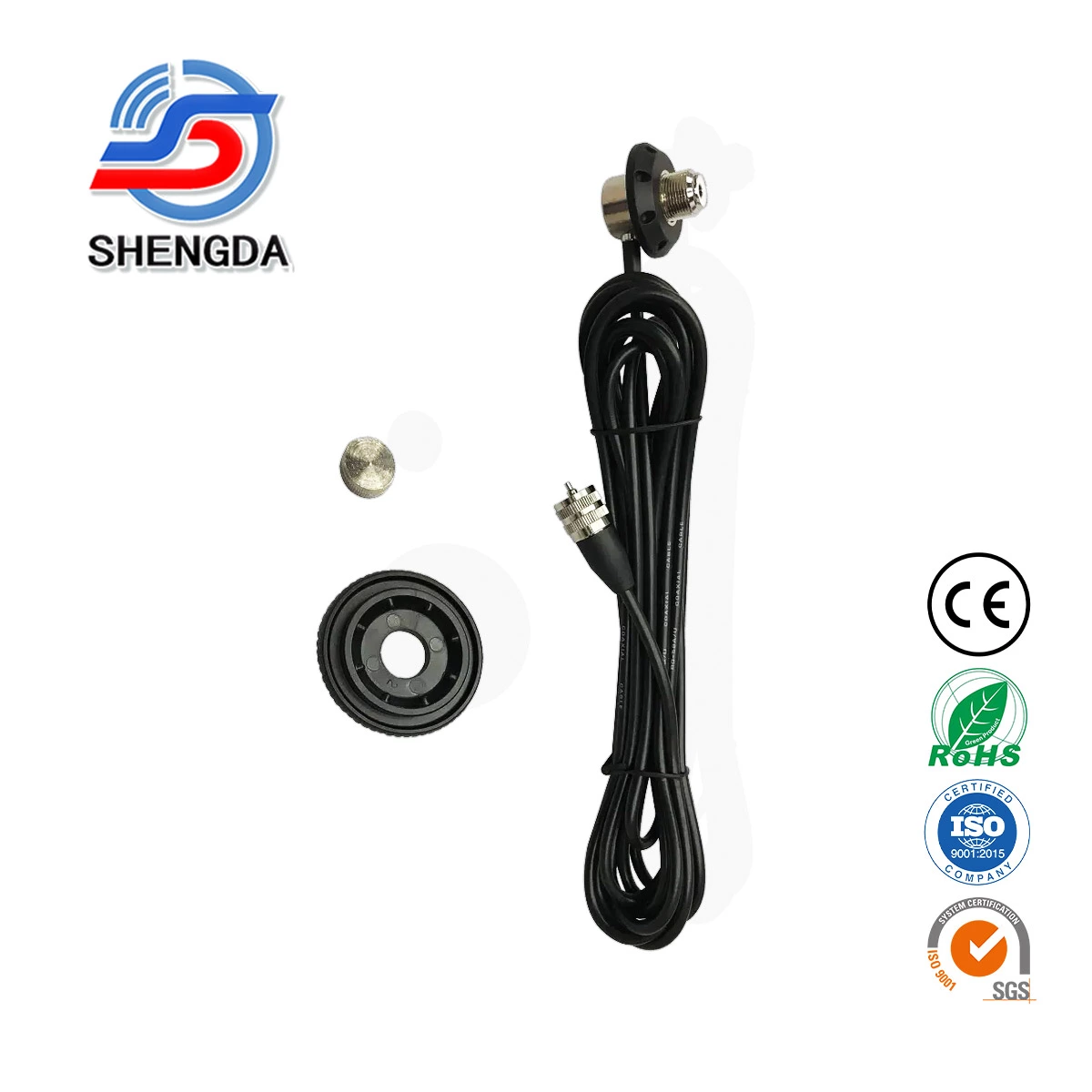
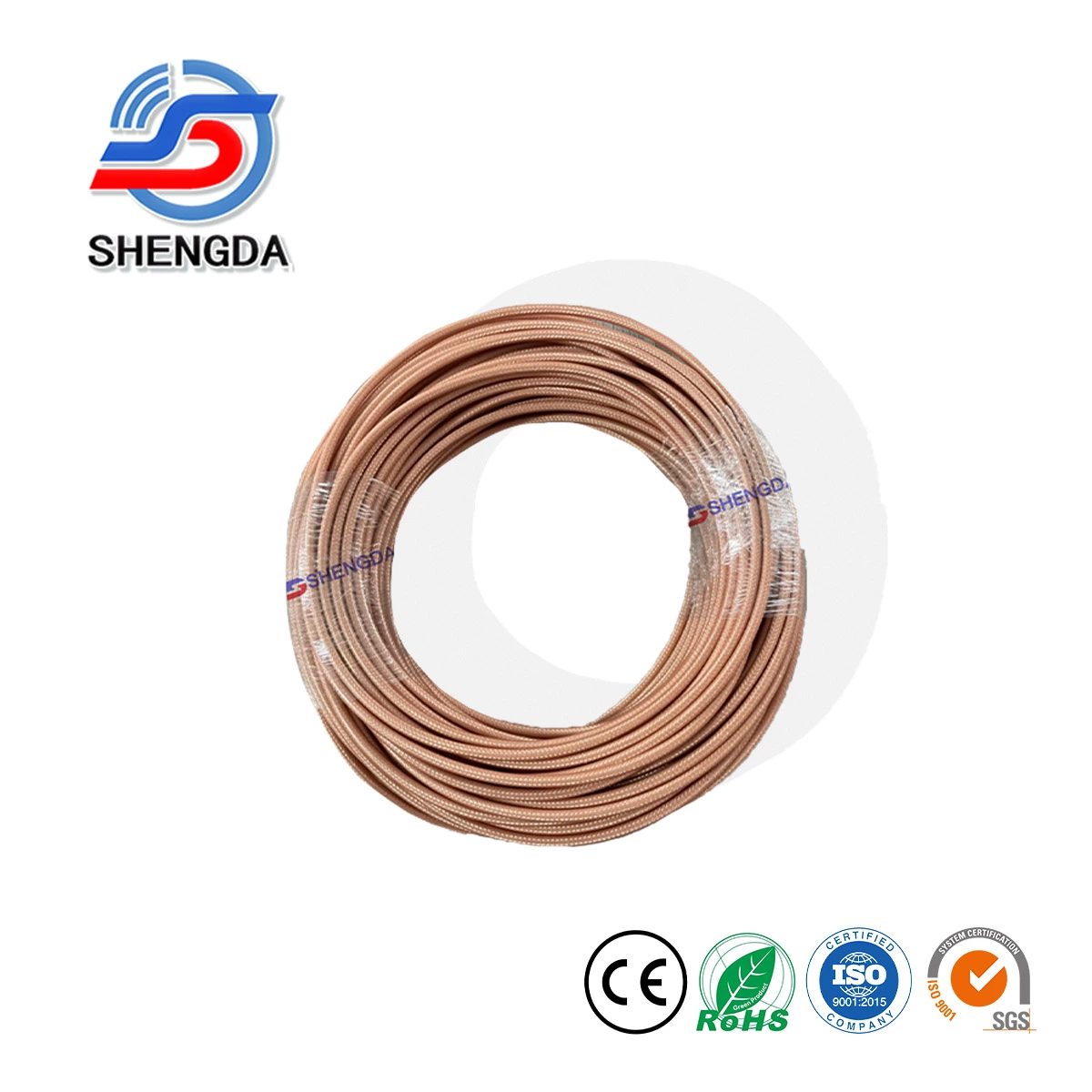
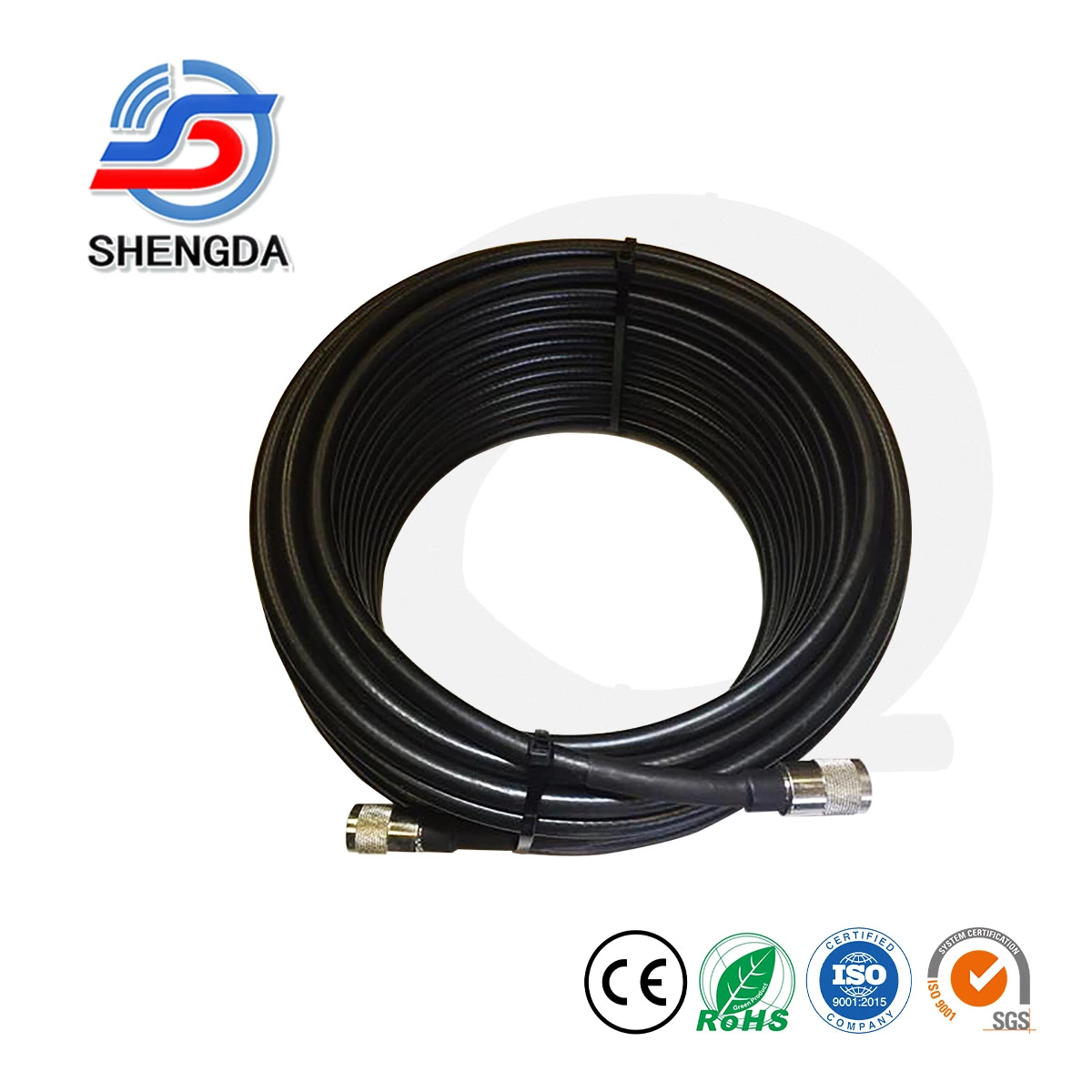
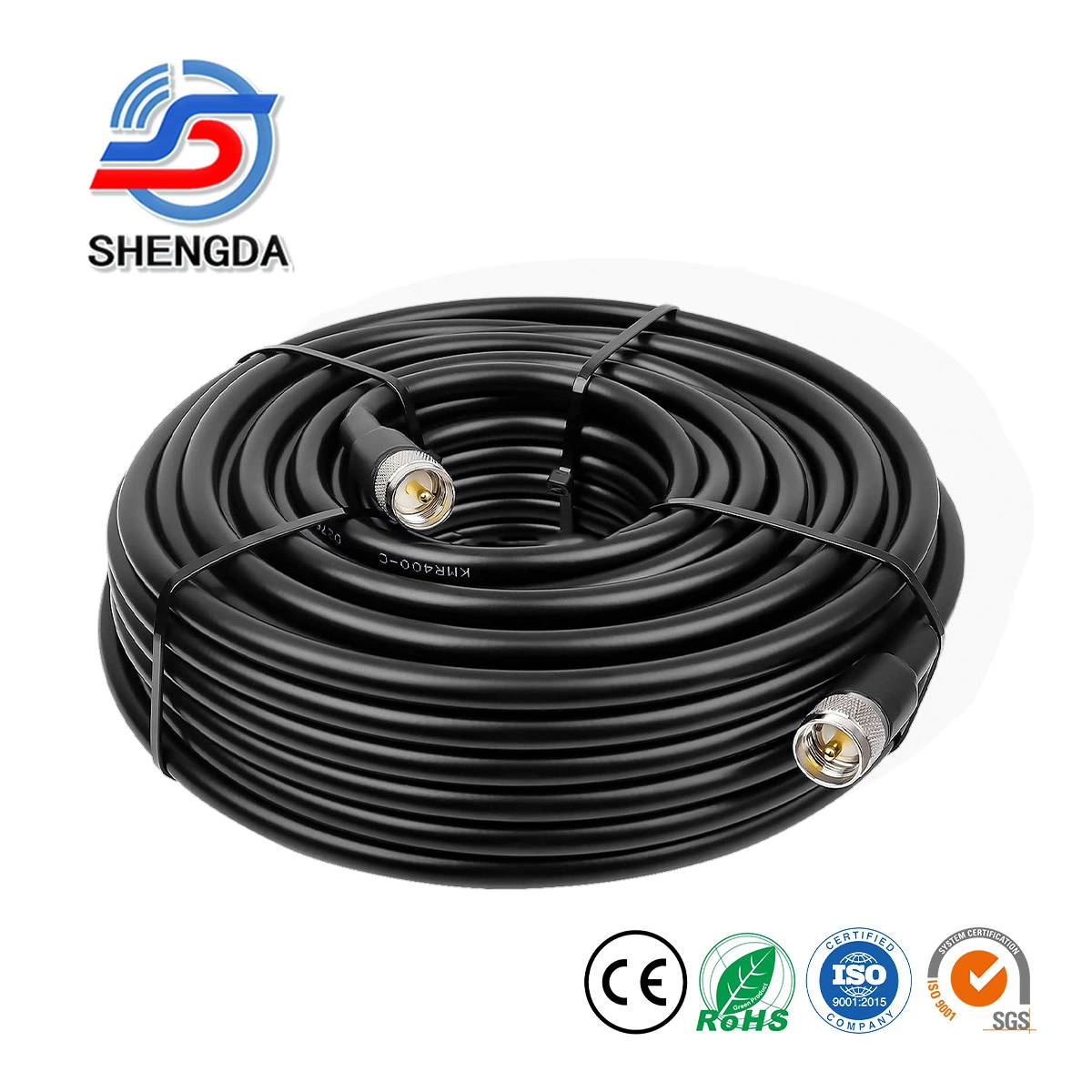
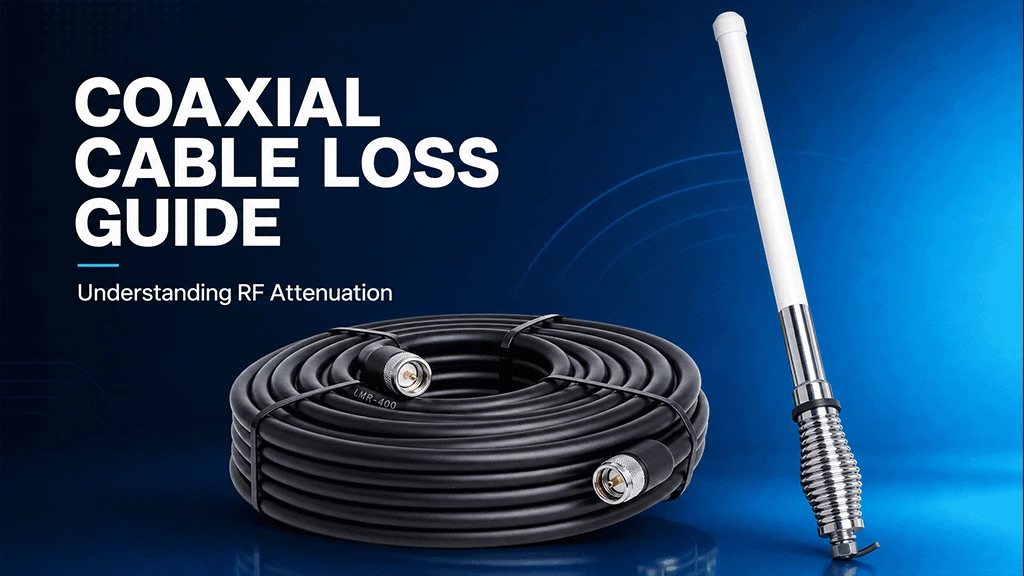
How Coaxial Cable Loss Affects Your Antenna Performance
How Coaxial Cable Loss Affects Your Antenna Performance
When designing or deploying a wireless communication system, a significant amount of attention is naturally placed on choosing the highest gain antenna and the most powerful transmitter. However, there is a critical, often overlooked component sitting right between them: the coaxial cable.
No transmission line is perfect. As radio frequency (RF) energy travels from your transmitter to your antenna (or from your antenna to your receiver), a portion of that energy is inevitably lost. This phenomenon is known as coaxial cable loss or attenuation.
Understanding how cable loss affects your system is vital to ensuring you don't waste precious transmitter power or degrade your receiver's sensitivity. Let's explore the science of cable attenuation and how to mitigate its impact.
The Physics of Cable Loss: Where Does the Power Go?
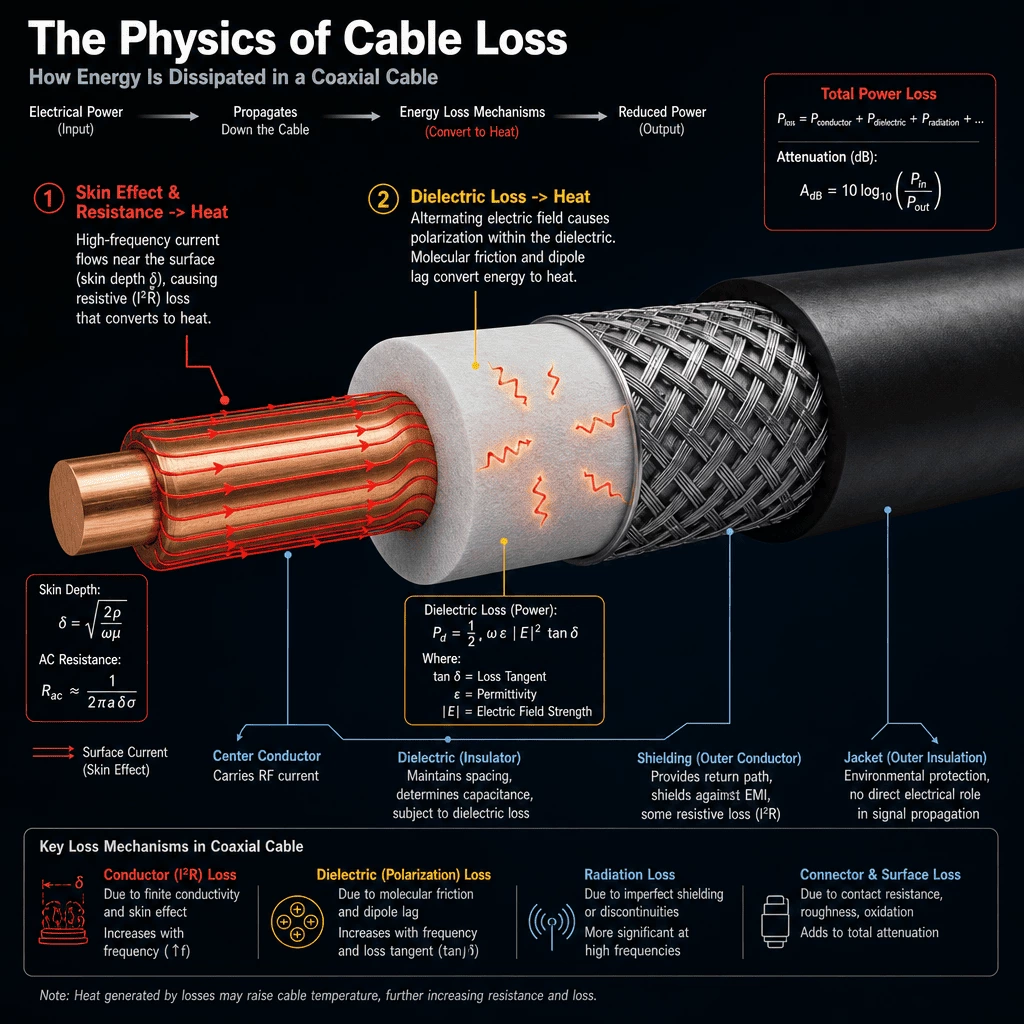
Coaxial cable loss is not a random occurrence; it is dictated by the physical materials and construction of the cable. When RF signals pass through a coax cable, energy is lost primarily in three ways:
- Dielectric Loss: The insulating material (dielectric) separating the center conductor and the outer shield absorbs a tiny amount of RF energy, converting it into heat. Higher-quality dielectrics, like foam polyethylene (PE) or PTFE, minimize this loss.
- Conductor Resistive Loss: Even highly conductive materials like copper have a baseline electrical resistance. As RF currents flow along the conductor, resistance converts some of the electrical energy into thermal energy (heat).
- The Skin Effect: At higher frequencies, RF current does not flow through the center of a wire; instead, it travels only along the outer "skin" of the conductor. This dramatically reduces the effective cross-sectional area of the wire, drastically increasing resistance and loss as the frequency goes up.
The Golden Rule of RF Attenuation: Cable loss is directly proportional to frequency and length. The higher the frequency of your signal, or the longer the physical cable run, the more power you will lose before it ever reaches the antenna.
Measuring Cable Loss: Understanding Decibels (dB)
In data sheets and RF specifications, cable loss is measured in decibels (dB) per 100 feet or dB per 100 meters at specific frequencies.
Because the decibel scale is logarithmic, a small change in dB represents a massive change in actual power. For example, a 3 dB loss means you have lost exactly 50% of your power.
To see how drastically different cables perform, let’s compare three industry-standard 50-ohm cables over a 100-foot (approx. 30 meters) run across different frequency bands:
| Cable Type | Diameter (Approx.) | Attenuation @ 150 MHz (VHF) | Attenuation @ 450 MHz (UHF) | Attenuation @ 2400 MHz (WiFi) |
|---|---|---|---|---|
| RG-58 (Thin/Flexible) | 4.95 mm | 5.2 dB | 9.3 dB | 24.0 dB (Unusable) |
| LMR-200 (Low-Loss) | 4.95 mm | 3.9 dB | 6.8 dB | 16.5 dB |
| LMR-400 (High-Performance) | 10.29 mm | 1.5 dB | 2.7 dB | 6.6 dB |
Real-World Example:
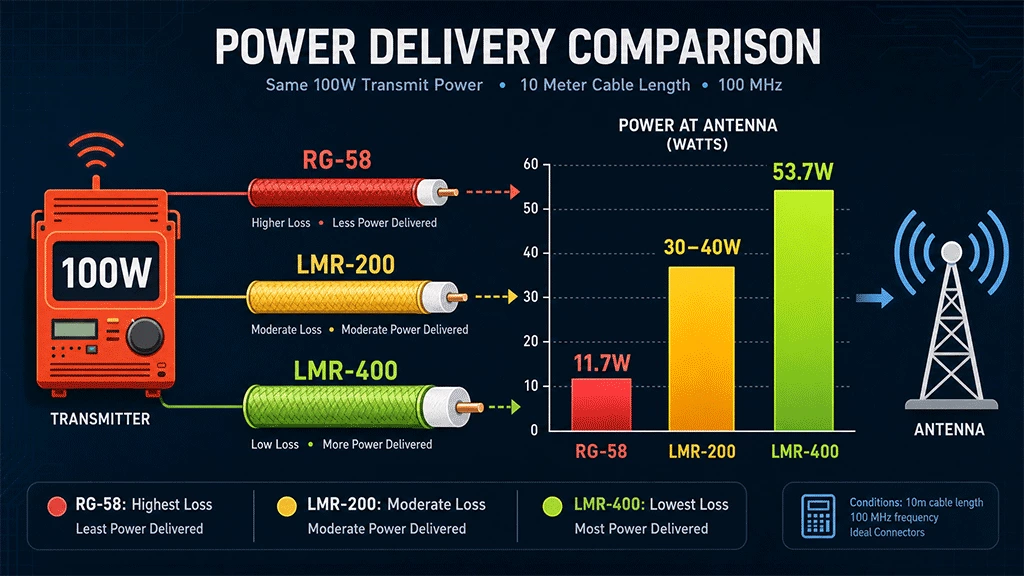
Imagine you are broadcasting a 450 MHz UHF signal with a 100-watt transmitter using 100 feet of RG-58 cable. With an attenuation of roughly 9.3 dB, only about 11.7 watts of power will actually reach your antenna. The other 88.3 watts are completely wasted as heat inside the cable! Upgrading to LMR-400 reduces the loss to 2.7 dB, delivering roughly 53.7 watts to the antenna—a massive performance boost.
How Cable Loss Directly Damages Antenna Performance
A high-loss transmission line cripples your antenna system in three major ways:
1. It Slashing Your Effective Radiated Power (ERP)
An antenna cannot create power; it can only focus the energy it receives. If your coax cable drops half your transmitter's power before it reaches a high-gain omnidirectional or Yagi antenna, your overall Effective Radiated Power (ERP) drops by half as well. This directly shrinks your coverage area and signal range.
2. It Destroys Receiver Sensitivity (The Rx Bottleneck)
Cable loss works both ways. In receive mode, the tiny, fragile microvolt signals picked up by the antenna from distant stations must travel down the same cable back to your radio. If the cable attenuation is high, it can degrade the signal-to-noise ratio (SNR) to the point where the signal sinks below the receiver's noise floor, making weak signals completely unreadable.
3. The "False Comfort" of a Good VSWR
An insidious side effect of high cable loss is that it can artificially mask a terrible antenna mismatch. If a cable has a high attenuation, the reflected wave coming back from a damaged antenna is weakened on its journey back to the transmitter. Your VSWR meter might show a perfect 1.2:1 near the radio, giving you a false sense of security while your system is actually failing at the antenna end.
Best Practices to Minimize Coaxial Cable Loss
To keep your RF communication system operating at peak efficiency, follow these critical engineering practices:
- Keep Cable Runs as Short as Possible: Always position your radio equipment as close to the antenna base as practical field conditions allow.
- Choose the Right Cable for Your Frequency: Do not use thin cables like RG-58 for high-frequency applications like 2.4 GHz WiFi, 4G/5G, or Helium/LoRa (868/915 MHz). Opt for thick, double-shielded, low-loss cables like LMR-400 or corrugated copper coaxial cables for infrastructure layouts.
- Minimize the Use of Adapters and Connectors: Every connector and adapter introduces a small amount of insertion loss (typically 0.1 dB to 0.5 dB per connection) and a potential impedance reflection point.
- Protect Against Moisture Ingress: Water entering a coaxial cable degrades the dielectric material rapidly, skyrocketing attenuation. Always use self-amalgamating waterproof tape on outdoor connectors.
Conclusion
A world-class antenna can only perform as well as the cable feeding it. By matching your operating frequency with a correctly rated, low-loss coaxial assembly and keeping physical distances short, you protect your hardware investments and unlock the full potential of your RF network.
Are you experiencing signal degradation, or planning a new wireless deployment that requires rock-solid RF performance? Explore our comprehensive range of high-performance base station, mobile, and customized antennas, or contact us to speak with our technical support team for expert system matching.